


XRP 2.0 has been trending in discussions regarding the future of Ripple and its cryptocurrency, XRP. Although XRP has existed in the market for over ten years, recent developments in blockchain technology, cross-border payments, and the ongoing Ripple lawsuit have sparked debates about the project’s next phase. XRP 2.0 does not indicate a new token but rather represents the conceptual next stage of XRP’s development, adoption, and practical usage. This article explores what XRP 2.0 could entail, its technological foundation, history, market role, and its potential to reshape international payments.
What is XRP 2.0?
XRP 2.0 represents the speculative second phase of XRP adoption and evolution. The concept emphasizes expanding XRP’s role within the financial infrastructure, broadening its use cases, and enhancing the XRP ledger network. Unlike forks or the creation of a new token, XRP 2.0 does not replace XRP technically; it is an aspirational vision of the asset’s future trajectory.
XRP 2.0 is associated with Ripple expanding beyond cross-border settlements and becoming a crucial component of the global financial system. Discussions under this term frequently involve scalability, interoperability, and institutional onboarding.
Historical Background of XRP
XRP was introduced in 2012 by Ripple Labs, initially called OpenCoin. The project was designed to provide rapid, low-cost, and scalable cross-border payments. Unlike Bitcoin, XRP does not rely on mining. Instead, it uses a consensus algorithm for transaction validation, enabling settlements in seconds with minimal fees.
Ripple has collaborated with banks and payment processors worldwide, targeting institutional use rather than individual consumers. XRP has persisted through challenges, including its litigation with the U.S. Securities and Exchange Commission (SEC) starting in 2020. Legal developments have shaped investor perceptions and may influence whether XRP 2.0 becomes a tangible reality.
Technology Behind XRP and Future Updates
The XRP Ledger (XRPL) underpins XRP, featuring several distinguishing attributes:
Fast Transactions
Transactions are confirmed in 3–5 seconds, ranking XRP among the fastest networks.
Low Fees
Transaction costs are minimal, often just a few cents, facilitating high-frequency use.
Energy Efficiency
Unlike proof-of-work systems, XRPL consumes minimal energy, a critical factor for sustainable adoption.
The concept of XRP 2.0 often includes potential XRPL enhancements, such as improved interoperability with central bank digital currencies (CBDCs), advanced smart contract capabilities, and scalability suitable for enterprise-grade applications.
Ripple’s Role within XRP 2.0
Ripple, the company driving XRP adoption, is central to XRP 2.0. Its RippleNet platform connects financial institutions, occasionally using XRP as a bridge currency. Ripple’s partnerships with banks, remittance providers, and fintech companies could form the foundation of XRP 2.0.
Further engagement with CBDC experiments or digital currency pilots could integrate XRP deeper into cross-border financial infrastructure, reinforcing the vision of XRP 2.0.
Practical Applications of XRP Usage
Several institutions, including Santander, SBI Holdings, and various Asian remittance providers, utilize Ripple’s technology. While not all transactions directly employ XRP, the infrastructure supports potential integration.
For XRP 2.0 to be impactful, adoption must scale beyond pilot projects to large-scale financial implementations, especially involving central banks or high-volume cross-border payment systems.
Market Position and Competition
XRP competes with other crypto assets and blockchain-based payment solutions. Stellar (XLM), created by a Ripple co-founder, shares similar cross-border finance goals. Stablecoins such as USDC and USDT dominate in everyday transfers due to fiat peg stability.
To stand out, XRP 2.0 must demonstrate unique advantages. Its speed, low costs, and institutional focus provide a foundation, but competition remains fierce in digital payments.
Legal and Regulatory Considerations
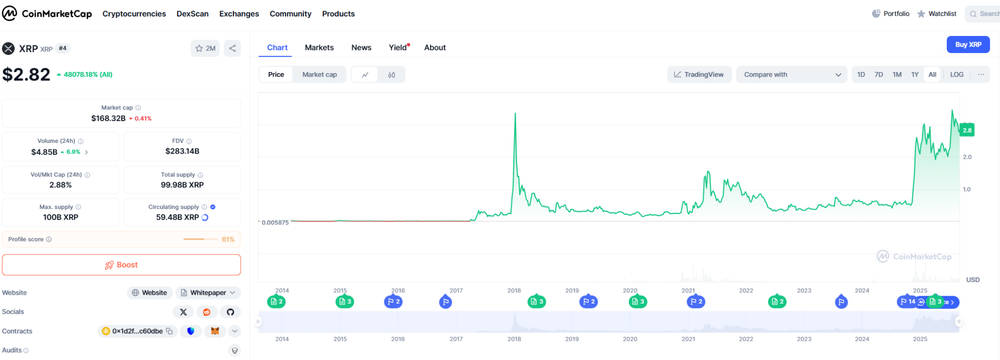
The SEC lawsuit against Ripple has been a major challenge, focusing on whether XRP constitutes a security. Partial rulings have favored Ripple, but legal ambiguity continues to affect XRP’s reputation and adoption.
XRP 2.0’s success requires regulatory clarity. A definitive ruling could encourage institutional involvement, while ongoing litigation may hinder XRP’s progress.
The Prospective Future of XRP 2.0
XRP 2.0 envisions XRP evolving beyond a payment bridge:
- Integration with CBDCs, positioning XRP as part of digital state currencies.
- Expanded DeFi applications through XRPL smart contracts or sidechains.
- Providing liquidity for tokenized global financial assets.
- Supporting micropayments for digital content and the Internet of Value.
These ideas remain speculative but illustrate potential directions for XRP development.
Risks and Challenges
Key risks for XRP 2.0 include:
- Regulatory uncertainty in the U.S. and globally.
- Competition from existing payment tokens and stablecoins.
- Reliance on Ripple achieving institutional adoption.
- Market volatility potentially discouraging long-term investment.
Understanding these factors is crucial when evaluating XRP’s future prospects.
Conclusion
XRP 2.0 represents a conceptual evolution of XRP rather than a new cryptocurrency. XRP’s fast, cost-effective, and energy-efficient technology positions it as a potential leader in digital payments. Its success depends on Ripple’s partnerships, regulatory clarity, and competitive performance. For investors, XRP 2.0 embodies both promise and uncertainty as the future of the token unfolds.
FAQ
What is XRP 2.0?
XRP 2.0 refers to the development and adoption phase of XRP, enhancing its usage and capabilities rather than representing a new coin.
Is XRP 2.0 the next version of XRP?
No, XRP 2.0 is not a fork or new coin. It denotes conceptual upgrades, adoption milestones, and future usage strategies.
How does XRP 2.0 differ from today’s XRP?
Current XRP offers fast, low-cost payments. XRP 2.0 envisions new use cases, including CBDC interoperability, DeFi applications, and broader integration in global finance.
Will XRP 2.0 replace other payment methods?
Not necessarily. It may complement existing systems through faster settlements and liquidity. Stablecoins remain significant competitors.
Where does Ripple fit in XRP 2.0?
Ripple drives most XRP adoption via RippleNet, bank partnerships, and CBDC projects. Its success is closely tied to XRP’s future.
Has XRP 2.0 been launched?
No, XRP 2.0 is a conceptual vision, contingent on regulatory clarity, adoption, and Ripple’s technological scalability.