



Ethereum has yet to solve its drawbacks, most notably scalability issues, which make using Ethereum expensive and slow. Various developers see this situation as a possibility to come up with a brand new platform similar to Ethereum (but without its deep-rooted problems) or just an Ethereum fork, meaning a platform based on Ethereum but with some improvements aimed at solving the scalability problem.
One of these platforms is Pulsechain. It is a layer-1 blockchain, an Ethereum fork, addressing some of the drawbacks of the Ethereum blockchain. This article provides the Pulsechain token price prediction for 2025, 2030, 2035, and other years. Also, it explores the past PLS token prices and answers the main questions concerning the PLS token.
Contents
What Is Pulsechain (PLS)?
Pulsechain (PLS) is a native token of the Pulsechain blockchain. The chosen $PLS stakeholders validate the transactions on Pulsechain. From the start, Pulsechain was conceived as a delegated proof-of-stake model-based blockchain to increase the network speed and limit costs compared to Ethereum, which used the proof-of-work model in the Pulsechain formative years.
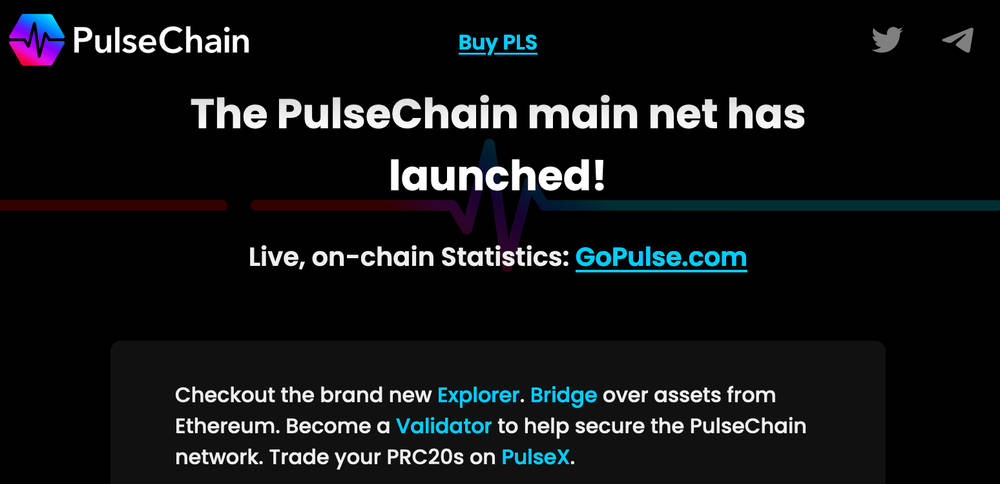
Low cost and high speed of transactions are achieved by decreasing block time to 3 seconds and introducing a fee-burning mechanism. This mechanism permanently deletes transaction fees from circulation, making the Pulsechain token deflationary and an increasingly scarce asset, potentially driving its price.
One of the planned events that is supposed to propel Pulsechain's following (and the PLS price) is the largest airdrop in history, which is set to occur after the network team replicates thousands of Ethereum-based tokens on Pulsechain and attracts numerous ERC20 token holders.
The platform's security is achieved via minimalistic design, relentless third-party audits, and rate limits that reduce spam volumes and DDoS attacks. Another factor contributing to Pulsechain's stability and safety is a high level of economic security, meaning that the costs of a potential Pulsechain hack are too high.
Pulsechain (PLS) Price Prediction for 2024, 2025, 2027, 2030, 2035, 2040
The table below shows the Pulsechain token price prediction for 2024, 2025, 2027, 2030, 2035, and 2040. On top of the future PLS price, you can see the potential ROI calculated for you. Under the table, you can read some insightful details concerning the future PLS price.
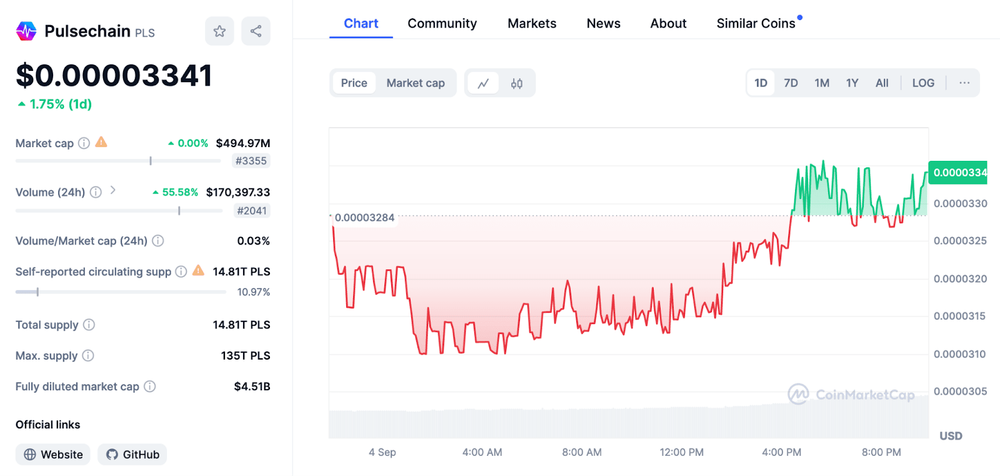
As of September 3, 2024, the PLS price is $0.000032. The market cap is under $0.5 million, which secures the token below 3500th using this metric.
2024
2024 was a turbulent year for the Pulsechain token. It saw a strong rally in the year's first half and survived a severe decline in the summer. The price shrunk by four just within seven months. Nevertheless, the token had the first major exchange listing in 2024 when it became available on MEXC. It will help it to keep growing further. In 2024, the PLS price may climb to $0.00005. By the end of the year we expect it to settle at around $0.000044.
2025
In 2025, Pulsechain will have to fight for further expansion, look for new exchanges to support the PLS token, find more ways to reach crypto investors and traders, and so on. We don't expect strong PLS growth in 2025. However, it may double compared to the current price (September 2024), reaching around $0.000063 by the end of 2025.
2027
Given that Pulsechain continues to do a decent job in the future, by 2027, the PLS token should gain more as a result of listing on more exchanges. At the same time, an improved presence on big exchanges will help the token establish its place on the market in the future. By the end of 2027, the Pulsechain token may reach $0.00013 or even exceed this mark a little.
2030
In 2028, the crypto market will see a strong rally triggered by another Bitcoin reward halving. This event, which occurs once every four years, constantly stimulates the growth of the BTC price, and the rest of the market follows the trend. For the Pulsechain token, it's a great chance to gain value faster in the short term. The correction will follow in 2029, though. By the end of 2030, the PLS token will be traded at $0.00045–$0.0005.
2035
Predicting the 2030s price is more complicated due to a relative lack of information about the upcoming events that may affect the PLS price. However, if we lean on the tech analysis, the PLS price may reach around $0.0055 by the end of 2035.
2040
If Pulsechain continues to develop steadily, in 2040, the PLS token price will exceed 4 cents.
Pulsechain (PLS) Price Analysis for the Past Several Years
In this table, you can check the main milestones of the PLS price over the years and read the short comments on the right to understand the reasons behind the price change better.
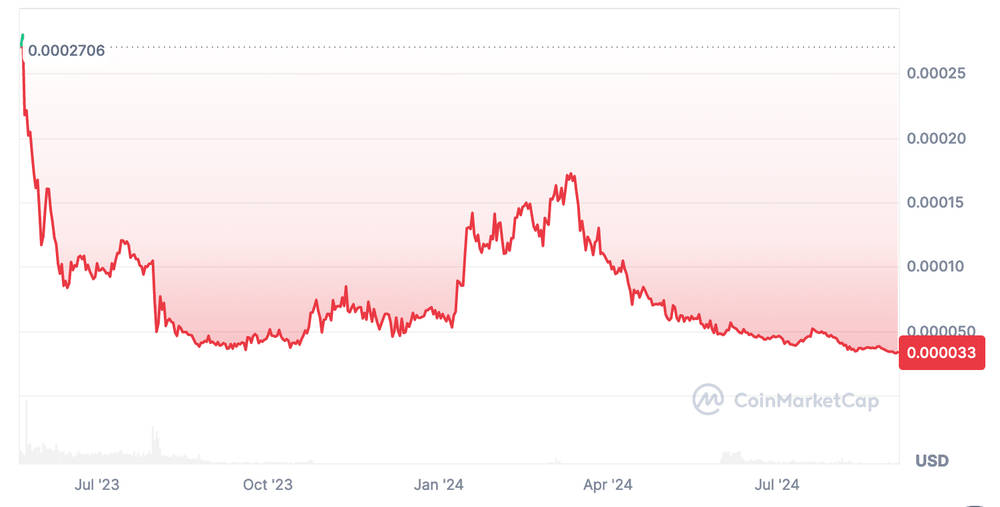
In general, the Pulsechain token’s price was pretty unstable all the time. As of September 2024, PLS mostly depends on the BTC trends and sometimes even cannot follow the uptrends of Bitcoin, staying low. Most probably, the better support from big crypto exchanges would have helped the price to be more stable.
Q&A
Is PLS a good investment?
We cannot give investment advice. As of September 2024, the last 6 months the PLS price was moving down. If the Pulsechain team manages to improve the availability of the token on the market, PLS may get more attractive.
What will be the PLS price in 10 years?
In 10 years (i.e., in 2034) the PLS price may reach $0.0034.
Should you buy PLS now?
As of September 2024, the PLS price is low for around half of the year and keeps on declining. If you want to invest some money in Pulsechain, the current downtrend may be seen as a buying opportunity. However, it’s advisable to do your own research before investing your money.
Conclusion
Pulsechain is an ambitious project aimed at solving the inherent Ethereum problems. However, the Pulsechain token price has been volatile and unstable. If we consider that the team continues to do a good job, the PLS price may reach around $0.0034 in ten years. However, if the Pulsechain team does not manage to keep the project above the surface, its value may vanish and the price will sink.