


How to claim unclaimed Bitcoin is a frequent question among people who discover forgotten wallets, unused exchange accounts, or inactive balances linked to past activity. Since Bitcoin’s launch in 2009, losing access to coins has been common, especially among early adopters or casual users. As Bitcoin’s value has grown, more individuals are now looking for ways to recover these dormant assets. This guide explains what unclaimed Bitcoin is, why it happens, and the safest ways to attempt recovery.
What is Unclaimed Bitcoin?
Unclaimed Bitcoin refers to coins that exist on the blockchain but are not being accessed or used by their rightful owner. Because Bitcoin is decentralized, there is no central authority to remind users of balances. Without a private key or recovery option, the funds remain locked on the blockchain and inaccessible.
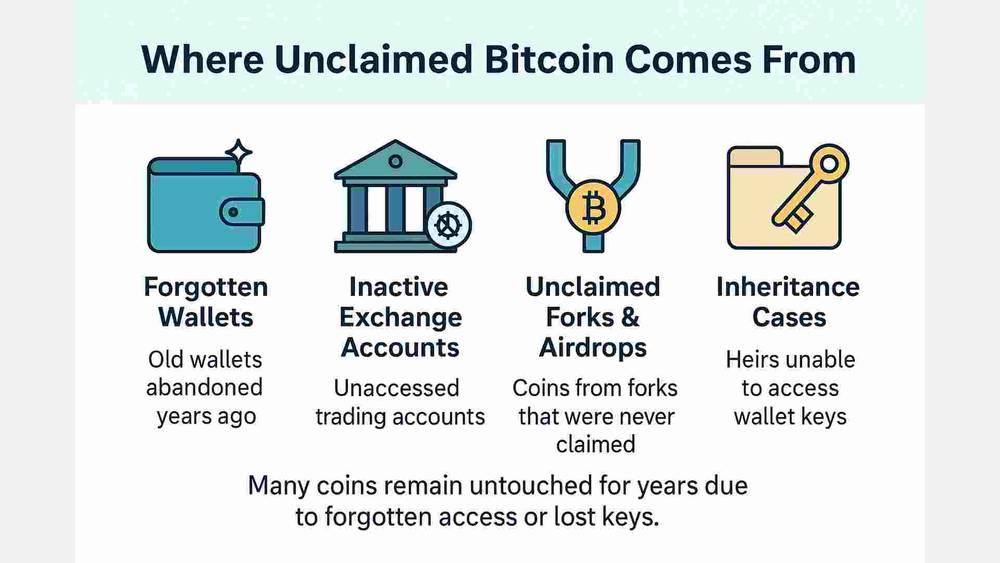
Examples of unclaimed Bitcoin include:
- Old wallets abandoned years ago.
- Exchange accounts that were never reactivated.
- Forks, rewards, or airdrops that were never claimed.
- Inheritance cases where heirs cannot access wallets.
The key distinction between “unclaimed” and “lost” Bitcoin is whether recovery remains realistically possible.
Historical Background
Since Bitcoin’s early days, millions of coins have become unclaimed. Estimates suggest that 3–4 million BTC may never be recovered, often due to lost keys or destroyed storage devices.
Notable examples include:
- Early miners who forgot private keys after mining coins with little value.
- Users who stored wallets on obsolete hard drives that were later discarded.
- Exchange collapses, such as Mt. Gox in 2014, which left users unable to withdraw funds.
These situations illustrate why unclaimed Bitcoin is so widespread and why recovery solutions are in demand.
How to Identify If You Have Unclaimed Bitcoin
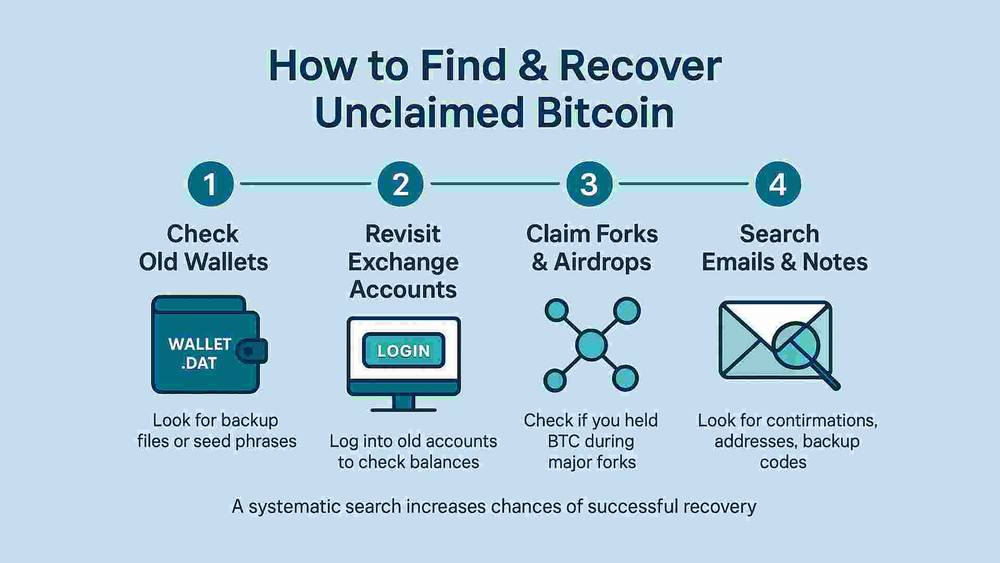
The first step is verifying whether you have any unclaimed funds. Practical steps include:
- Checking old wallets: Look for backup files or recovery phrases from past wallet installations.
- Revisiting exchange accounts: Logging into early accounts may reveal balances.
- Exploring forks and airdrops: If you held Bitcoin during a fork like Bitcoin Cash, you may still be eligible for duplicate assets.
- Searching emails and documents: Old confirmations, addresses, or backup codes may lead to recovery.
A careful search increases the chances of reclaiming assets.
Tools and Recovery Services
There are tools and services available to help locate or retrieve unclaimed Bitcoin:
- Blockchain explorers: Enter a wallet address to see if coins are still present.
- Recovery software: Tools like wallet.dat password crackers can unlock old encrypted files.
- Professional services: Specialists can attempt recovery, though scams are common.
- Hardware recovery: Technicians may retrieve data from broken devices containing wallets.
Always verify the reputation of any service before sharing sensitive information.
Security Principles When Claiming Bitcoin
Recovering unclaimed Bitcoin requires strong security practices:
- Never share private keys: Scammers often pose as recovery experts. Keep keys private.
- Use official sources: Download wallets and software only from trusted websites.
- Cold storage: Move recovered coins to a hardware wallet for safety.
- Two-factor authentication: Secure related email and exchange accounts with 2FA.
Neglecting security can result in losing assets all over again.
Companies and Organizations Involved
Several entities assist with Bitcoin recovery:
- Wallet providers: Platforms like Electrum or Blockchain.com allow recovery with seed phrases.
- Exchanges: Services like Coinbase may return access to dormant accounts after identity verification.
- Legal services: In inheritance cases, attorneys may help heirs prove ownership and recover assets.
These organizations highlight how legal and technological processes can support recovery.
Examples of Recovery in Practice
Real-world cases demonstrate how recovery is possible under the right conditions:
- Password cracking: An early miner recovered thousands in BTC using software to unlock an old wallet.dat file.
- Exchange reactivation: Frozen accounts were restored after users provided identity documents.
- Fork claims: Holders of Bitcoin in 2017 successfully claimed Bitcoin Cash by importing private keys into compatible wallets.
Such cases show recovery is challenging but achievable with persistence and correct information.
Risks and Challenges
Despite available methods, several risks remain:
- Permanent loss: Without private keys or seed phrases, coins cannot be retrieved.
- Scams: Fake recovery services prey on desperate users.
- Technical barriers: Outdated software or hardware may make access extremely difficult.
Bitcoin’s decentralized nature ensures security but also means there is no central authority to help recover lost keys.
Future Prospects of Unclaimed Bitcoin
As Bitcoin adoption increases, unclaimed coins are expected to grow as well. Efforts are underway to improve wallet backup systems, inheritance options, and recovery tools.
Blockchain-based identity solutions may eventually make inheritance claims easier. However, the core rule remains unchanged: without private keys or recovery phrases, Bitcoin cannot be transferred.
Education and secure storage practices remain the most reliable protection against future losses.
Conclusion
How to claim unclaimed Bitcoin is a complex but essential matter. From abandoned wallets to exchange failures and unclaimed forks, coins may sit idle for years. While recovery is possible with tools, services, and careful research, it requires security awareness and caution against scams. Although millions of Bitcoins may remain permanently inaccessible, those with valid keys or old accounts can still reclaim their assets if they proceed carefully and responsibly.
FAQ
1. What is unclaimed Bitcoin?
It refers to coins owned by someone but unused due to forgotten keys, lost accounts, or inactive wallets.
2. How can I check if I have unclaimed Bitcoin?
Review old wallets, exchange accounts, and confirmation emails, and check addresses on blockchain explorers.
3. Can lost Bitcoin be recovered?
If private keys or phrases are lost permanently, recovery is impossible. If backups exist, coins can be restored.
4. Are recovery services trustworthy?
Some legitimate services exist, but scams are widespread. Never share private keys and always verify credibility.
5. Can heirs claim unclaimed Bitcoin?
Yes. With private keys, seed phrases, or exchange accounts, heirs may recover funds, sometimes requiring legal proof.